Peel and Stick Flooring: Where It Works and Where It Fails
October 20, 2026, by Levi Winkler, Flooring Expert & Owner of Rejuvenation Floor & Design
You’re standing in the flooring aisle holding a box of peel and stick wood flooring that costs less than a nice dinner out. The pictures look great. A couple of YouTube videos make it look like a one-Saturday job. So what’s the catch?
Sometimes there isn’t one. Peel and stick can be a perfectly smart buy. But in the wrong room, it’s money you’ll be scraping off the floor in a couple of years. Where it goes and how long you need it to last decide almost everything.
At Rejuvenation Floor & Design, we see a lot of peel and stick flooring, usually when a homeowner calls us to pull it up and replace it with a floor built to last. We don’t sell it, but after removing plenty of it from Portland homes, we have a clear picture of where it works and where it doesn’t.
What is Peel and Stick Wood Flooring?
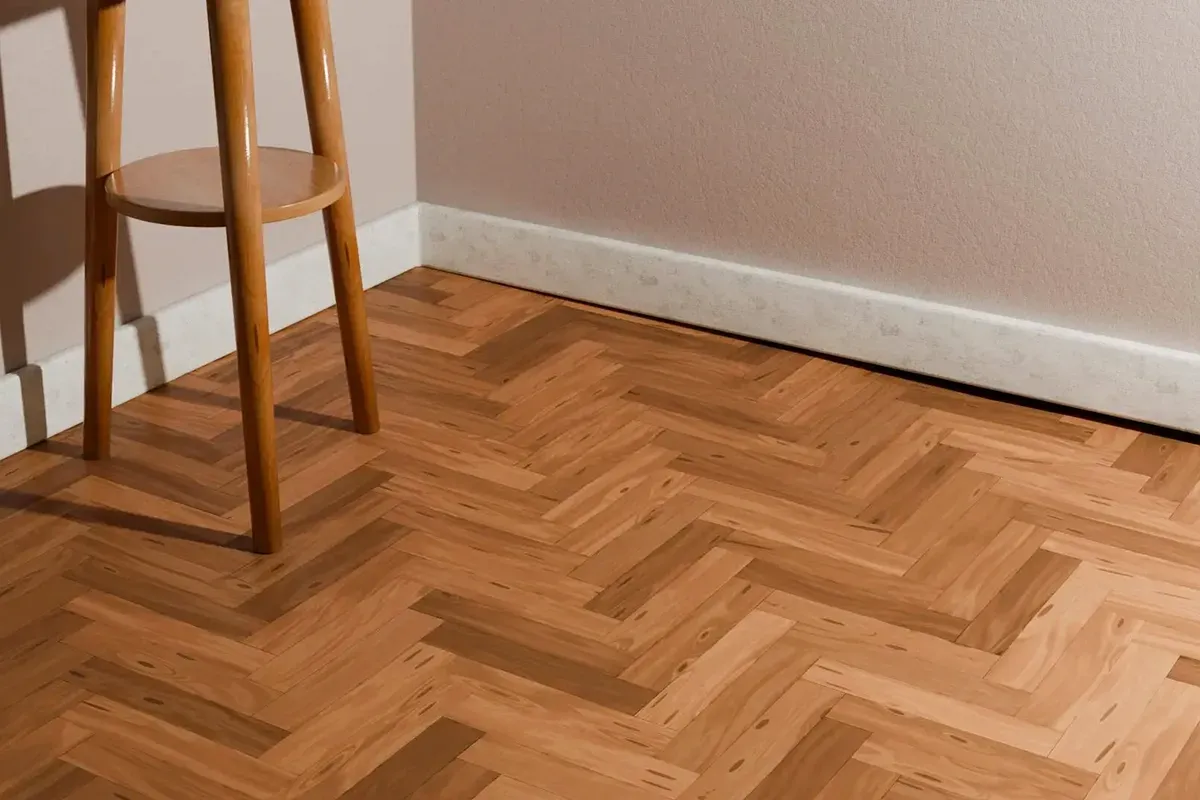
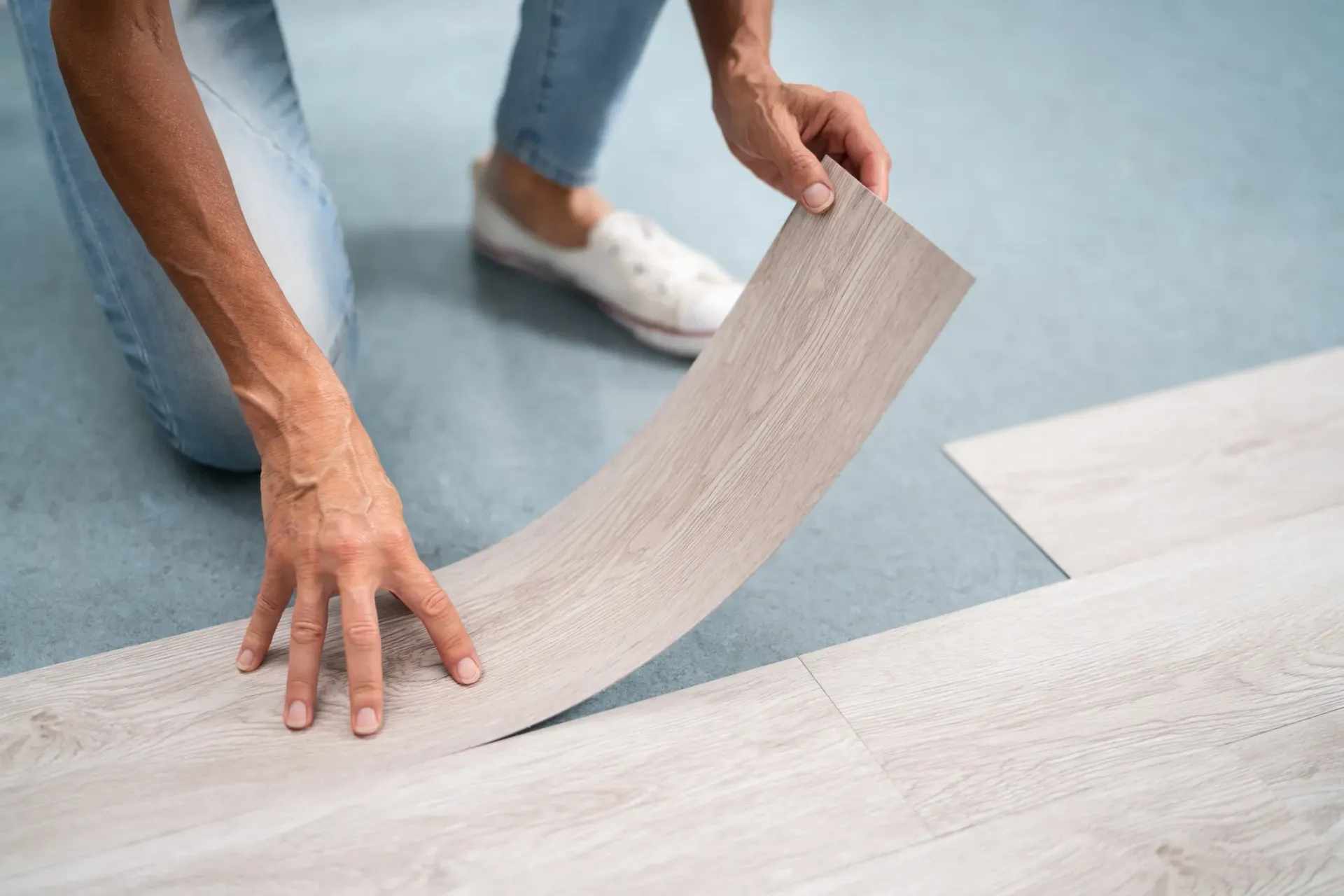
Peel and stick flooring, also known as peel and stick vinyl flooring, is thin vinyl flooring with a self-adhesive backing. It bonds to the subfloor as you press it down, so no separate glue is needed. It comes in two main formats:
- Peel and stick wood flooring: long planks printed to look like hardwood
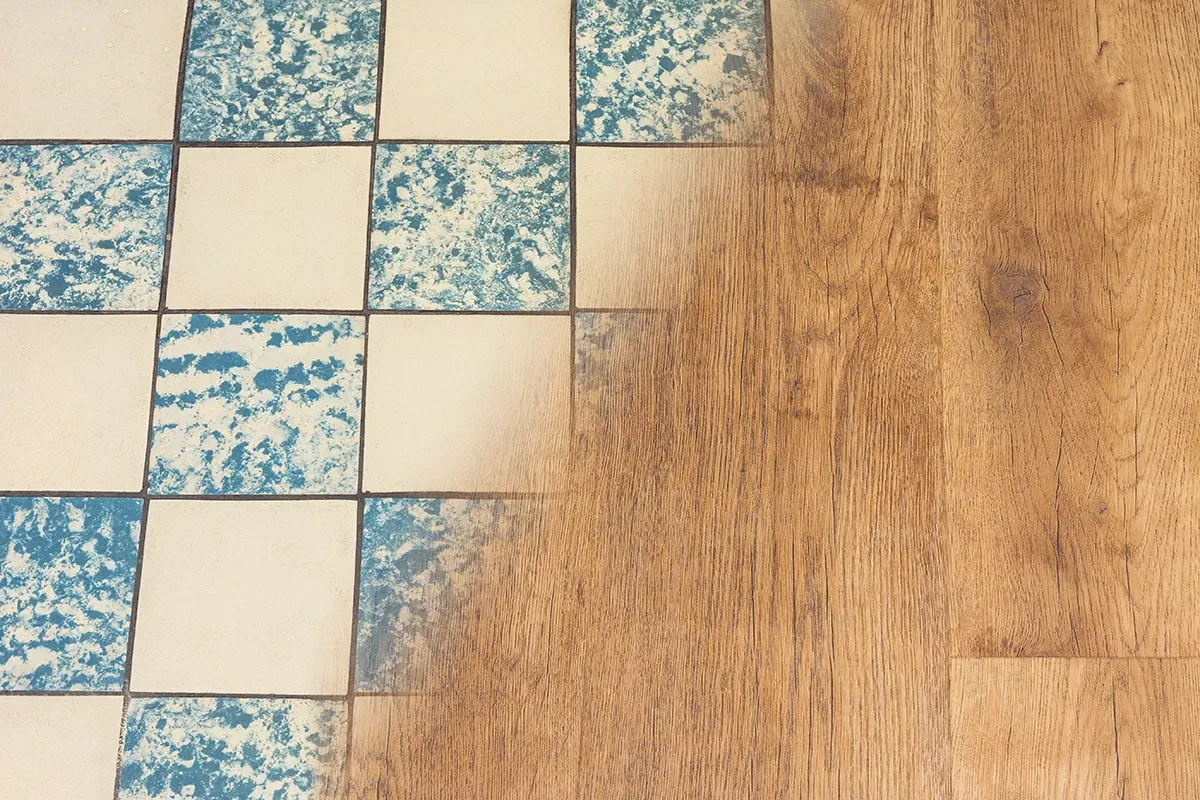
- Peel and stick tile flooring: square tiles printed to look like ceramic, stone or patterned tile
Both are built the same way, with three layers:
- Design layer: a printed, photographic image of wood grain or tile
- Wear layer: a clear protective coating on top, often only a few mil thick
- Adhesive backing: pressure-sensitive glue that grips under firm pressure
Most products are 1.5 to 2mm thick, which is much thinner than standard luxury vinyl plank or engineered hardwood. Despite the name, peel and stick wood flooring almost never contains real wood. Real-wood peel and stick products do exist, but they’re made for accent walls, ceilings and furniture. Wood floors need an engineered backing to handle foot traffic and uneven subfloors, and a thin veneer with adhesive on the back doesn’t have one.
In this guide, “peel and stick” means peel and stick vinyl flooring, whether wood-look planks or tiles, since that’s what almost everyone ends up buying.
Where Peel and Stick Flooring Falls Short
1. There isn’t much between your floor and your life
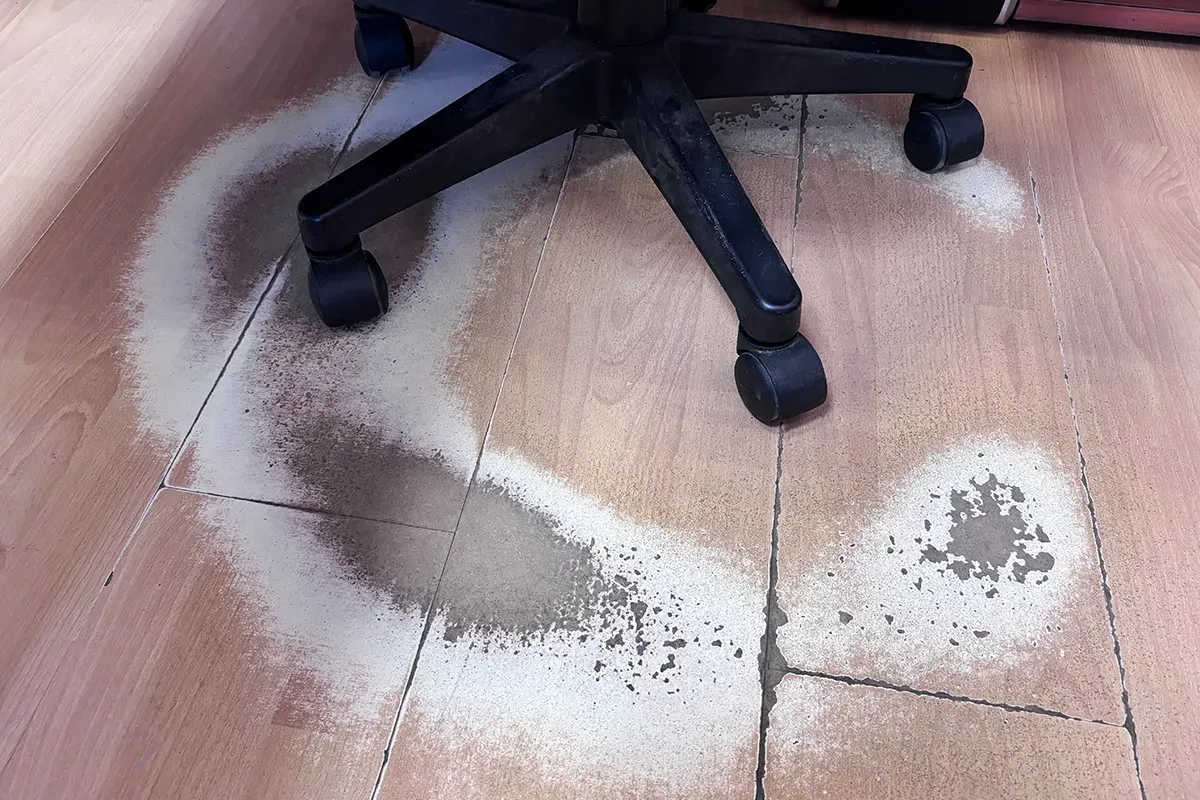
A standard click-lock LVP plank runs roughly 4 to 8mm thick with a wear layer of 12 to 20 mil or more. (A mil is a thousandth of an inch, and the wear layer is the clear top coat that takes the abuse.) Peel and stick has a fraction of that. Dog claws, chair legs, and the grit that comes in on shoes all show up faster, and once the print wears through there’s no fixing it.
2. Every flaw underneath shows through
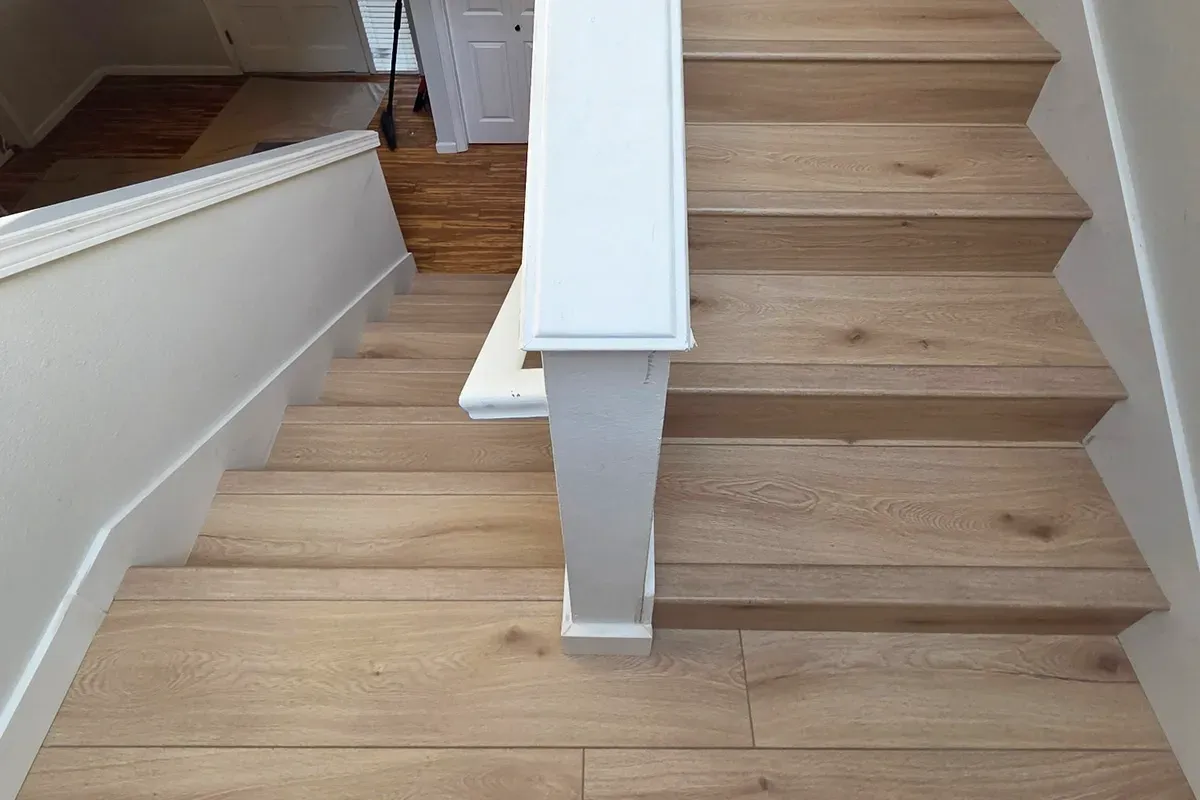
Thin vinyl telegraphs, meaning it takes the shape of whatever it’s sitting on. A ridge of dried drywall mud, a nail head, the seams in an old plank subfloor, the grout lines on tile you’re covering. All of it will eventually read through the surface.
Contractors like to say prep is most of any flooring job. With peel and stick, prep is basically the whole job, because there’s no rigid core to bridge small dips and bumps. In a lot of Portland’s older bungalows and foursquares,
getting the subfloor flat enough is real work: patching, sanding, sometimes a new layer of underlayment plywood. That takes a bite out of the “cheap and fast” appeal.
3. The seams are the weak spot
Peel and stick planks just butt up against each other. There’s no locking joint holding them together. As the house warms and cools through the seasons, the vinyl moves a little, edges start to lift, and small gaps open up and fill with dirt.
The surface itself is waterproof, but the seams aren’t sealed. Water from a wet mop, a leaking dishwasher, or a dog bowl that gets knocked over can find its way underneath, and the adhesive doesn’t love that.
4. Cool slabs and Northwest basements
Pressure-sensitive adhesive wants a warm, dry, clean surface. Concrete basement slabs around Portland and Vancouver tend to stay cool most of the year and can push moisture vapor up from below, which is close to the worst-case scenario for this kind of glue. Most installation instructions call for a room-temperature space and a sealed or primed surface for a reason. When we see peel and stick failing, it’s very often in a basement. Needless to say, there are much better
flooring options for basements.
5. Taking it up isn’t as easy as the box suggests
“Removable” usually means the planks come up. The adhesive residue is another story, and it often takes a scraper and solvent to get the subfloor clean enough for the next floor.
One more thing worth knowing if your house was built before the 1980s. It’s tempting to stick new planks right over old sheet vinyl or 9x9 tiles, and that can work fine. But some older vinyl floors and their adhesives contain asbestos, so if you’re ever pulling up or scraping those layers, have them tested first.
Where It Actually Makes Sense
There are places where peel and stick earns its spot, mostly where low traffic, low moisture, and a short time horizon line up:
- Rentals, where you can’t make permanent changes (check your lease, and plan for the cleanup when you move out)
- Closets, pantries, and small laundry nooks that see light foot traffic
- A stopgap floor in a room you already plan to redo in a year or two
- Craft rooms, storage rooms, or a kid’s play corner where you mostly want something cleaner-looking than what’s there now
In those spots the math works, and a box or two can make a dated space look a lot fresher.
The Cost Math Most People Skip
Peel and stick looks cheap because of the per-square-foot price on the box, and the material really is inexpensive. The better question is cost per year of use.
If a peel and stick floor in a busy kitchen or entry starts lifting and scuffing within a few years, you’re paying for it twice: once for the planks, and again for removal, cleanup, and a real floor.
A good click-lock floor or factory-finished engineered hardwood, installed over a properly prepped subfloor, can easily last well over a decade with normal care. Spread over that lifespan, the “expensive” floor often ends up cheaper.
The savings also assume you’re doing it yourself. If you’re paying someone to install it, labor and subfloor prep make up a big share of the cost no matter which product goes down, so the gap between peel and stick and a sturdier floor shrinks quickly.
Better Options for a Wood Look That Lasts
If the room gets real use, these hold up much better:
- Waterproof laminate. This is our first pick for a lot of homes. It has a hard, scratch-resistant surface, convincing wood visuals, and good water resistance at the joints. Just make sure it’s actually rated waterproof and not merely water-resistant, since those are very different products.
- Click-lock LVP or SPC. These are floating floors, meaning the planks lock to each other instead of being glued to the subfloor. The rigid core (SPC stands for stone plastic composite) bridges minor imperfections that would telegraph through peel and stick. Quality varies a lot here, and the locking joints on thinner budget planks can be fragile, so a thicker plank is worth paying for.
- Glue-down LVP. Installed with a full-spread adhesive (glue troweled across the whole subfloor, not just a sticky back), it’s a solid choice for slabs, commercial spaces, and rooms where you don’t want any floating-floor movement. It’s a very different animal from peel and stick, even though both are “glued.”
- Engineered hardwood. If what you really want is wood, get wood. Engineered planks have a real hardwood top layer over a stable plywood core, which handles our Northwest humidity swings better than solid wood in a lot of situations. Factory-finished lines like the Mirage and Lauzon floors we carry come with durable finishes applied before the boards ever leave the plant.
So, Is Peel and Stick Flooring a Waste of Money?
In a closet, a rental, or a room you’ll redo soon, no. It’s a reasonable, inexpensive fix. In a kitchen, entry, basement, or anywhere you want the floor to last, it usually is, because you’ll end up paying for flooring twice.
If you do go with peel and stick flooring, give it its best shot. Get the subfloor flat and clean, prime it if the manufacturer calls for it, let the planks and the room sit at normal indoor temperature before you start, and run a floor roller over everything once it’s down so the adhesive makes full contact. Buy an extra box, too. Matching a discontinued pattern two years from now is no fun.
If you’d rather put down a floor once and be done with it, stop by the Rejuvenation Floor & Design showroom to see laminate, LVP and engineered hardwood in person. Or, if you’re in Portland, Oregon or the surrounding areas, we can come to your home for a free in-home estimate and help you choose a floor that suits the room, your budget and how you actually live.
About the Author:
Levi Winkler is the owner of Rejuvenation Floor & Design, where he has been helping homeowners and businesses transform their spaces with high-quality flooring for over 16 years. Based in Portland, Oregon, Levi specializes in hardwood flooring, as well as luxury vinyl, laminate, and more. With decades of hands-on flooring installation and restoration experience, Levi is known for his attention to detail, product knowledge, and commitment to long-lasting results. He works closely with clients to ensure every flooring project is tailored to their style, needs, and budget.
Recent Articles