How to Clean Bamboo Flooring: Cleaners, Tips & Mistakes
October 8, 2026, by Levi Winkler, Flooring Expert & Owner of Rejuvenation Floor & Design
It rains frequently in Portland, Oregon and with it comes the usual parade of wet shoes, damp dog paws, and that fine layer of grit that seems to show up out of nowhere. If you've got bamboo floors, you've probably wondered whether your cleaning routine is helping or slowly wearing things down.
Bamboo is a tough floor. But it's surprisingly many people don't know how to clean bamboo flooring and it's easy to do it the wrong way. Most of the damage we see on bamboo has nothing to do with heavy use. It comes from the wrong mop, the wrong cleaner, or too much water.
At Rejuvenation Floor & Design, we work with bamboo floors all the time, from installation and repairs to helping Portland homeowners figure out why a floor isn’t looking the way it should. We know how the different bamboo styles behave, which cleaners manufacturers actually stand behind, and how our wet winters and dry, furnace-heated homes affect these floors. This guide pulls all of that together so you can keep yours looking good for years.
You're Cleaning the Finish, Not the Bamboo
Most bamboo flooring comes prefinished, meaning the protective coating is applied at the factory before it ever reaches your house. That coating is usually several layers of polyurethane with aluminum oxide mixed in (a mineral additive that makes the surface much more scratch resistant). When you clean a bamboo floor, you're really cleaning and protecting that finish. Keep it healthy and the bamboo underneath stays protected.
It also helps to know which type you have. Strand-woven bamboo is made from shredded fibers compressed with adhesive under heavy pressure, and it's extremely hard, often scoring well above red oak on the Janka scale (the standard test for how well wood resists dents).
Horizontal and vertical grain bamboo is made from glued strips and is noticeably softer. Both get cleaned the same way, but the softer styles will show scratches from grit sooner, so the dry-cleaning step matters even more.
One more thing worth knowing: bamboo is technically a grass, and the boards' weak point is the seams. Water that sits on the surface is a problem. Water that gets pushed down between the boards is a bigger one.
How to Clean Bamboo Flooring in 2 Steps
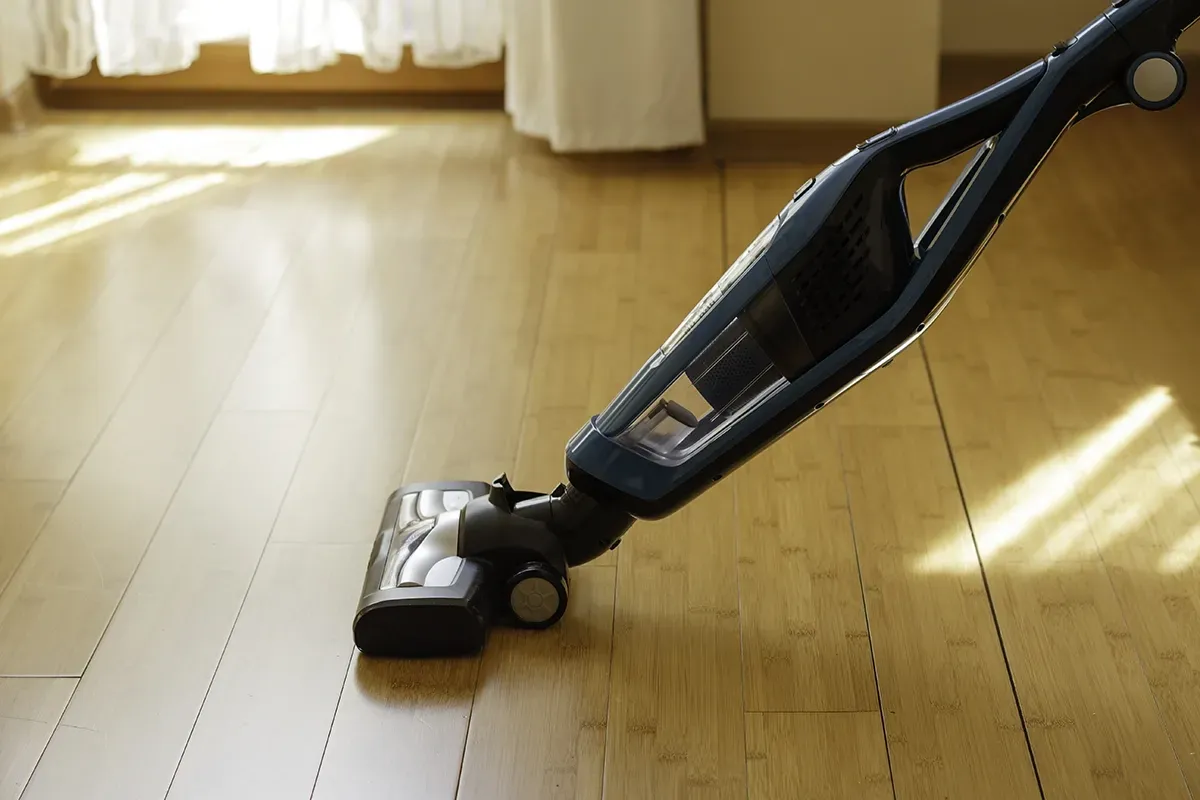
- Start dry. Every time. A soft-bristle broom, a microfiber dust mop, or a vacuum on its hard-floor setting (with the beater bar turned off) will pick up the sand and grit that act like sandpaper under shoes. In kitchens and entryways that might mean daily during the rainy months. Elsewhere, every few days is usually plenty.
- Then go damp, not wet. Lightly mist a manufacturer-approved cleaner onto the floor or the mop pad and go over it with a microfiber flat mop. A good rule of thumb is that any moisture left behind should evaporate within a minute or so. If you're seeing streaks of standing water, you're using too much. For most homes, a damp clean once a week is enough, more often in high-traffic spots.
That's honestly the best way to clean bamboo floors. No buckets, no scrubbing.
How to Remove Spills, Scuffs, and the Stuff That Sticks
- Spills: Blot them up right away with a dry towel. Don't wipe a puddle around, and don't let it sit. Pet water bowls are a sneaky culprit here, so put a waterproof mat underneath.
- Scuff marks: Put a little of your floor cleaner on the corner of a microfiber cloth, rub the scuff out, and buff the spot dry with a clean section of the cloth. Most rubber sole marks lift right off.
- Gum, wax, or sticky residue: Harden it with a bag of ice, then gently lift it with a plastic putty knife or an old credit card. Avoid metal scrapers and solvents like mineral spirits or acetone.
- Light scratches: Many manufacturers sell color-matched touch-up markers and fill sticks for their bamboo lines. They're great for shallow marks. Deeper gouges or a damaged board are a repair job, not a cleaning one, and a single plank can often be replaced without touching the rest of the floor.
Which Bamboo Floor Cleaners to Use
Your floor's manufacturer has the final word here, so it's worth digging up the care sheet (or looking it up online by brand and product line). Many bamboo makers name specific products, and using something unapproved can create warranty headaches if a problem ever comes up.
That said, a few names come up again and again. Bona Hardwood Floor Cleaner, especially the Bona Pro Series version, is the cleaner many bamboo manufacturers recommend directly, and it pairs well with Bona's microfiber spray mop.
Bam-Brite is a bamboo-specific cleaner some manufacturers suggest as well. Whatever you choose, look for something labeled pH-neutral and safe for prefinished wood floors, and test it in a closet or under a rug first if you're unsure.
What to Keep Away From Your Bamboo Flooring
Some of the most popular cleaning "hacks" are exactly what wears these floors out. Skip:
- Steam mops. They push heat and moisture right into the seams, can cloud the finish, and void many bamboo warranties outright.
- Vinegar. It's the internet's favorite DIY cleaner, but it's an acid, and over time it dulls the finish.
- Ammonia, bleach, and harsh all-purpose cleaners. Same problem, different chemistry.
- Oil soaps, waxes, and "shine restorer" polishes. These leave a film that builds up, looks cloudy, and eventually has to be stripped or recoated away.
- String mops and buckets. Too much water, too hard to control.
When Humidity is Part of the Cleaning Conversation
This one surprises people. Bamboo expands and contracts with moisture in the air just like hardwood does, and most manufacturers want indoor relative humidity kept somewhere around 40 to 60 percent.
Here's the twist in Portland and the Pacific Northwest. It's wet outside for months, but once the furnace kicks on, indoor air can get pretty dry. That's when you might notice thin gaps opening between boards in January or February, which usually close back up by summer. A cheap hygrometer (a small humidity gauge) will tell you where your house sits, and running a humidifier during heating season keeps the floor more stable. Over in Vancouver and out toward the Gorge, where winter winds dry things out even more, it's worth keeping an eye on.
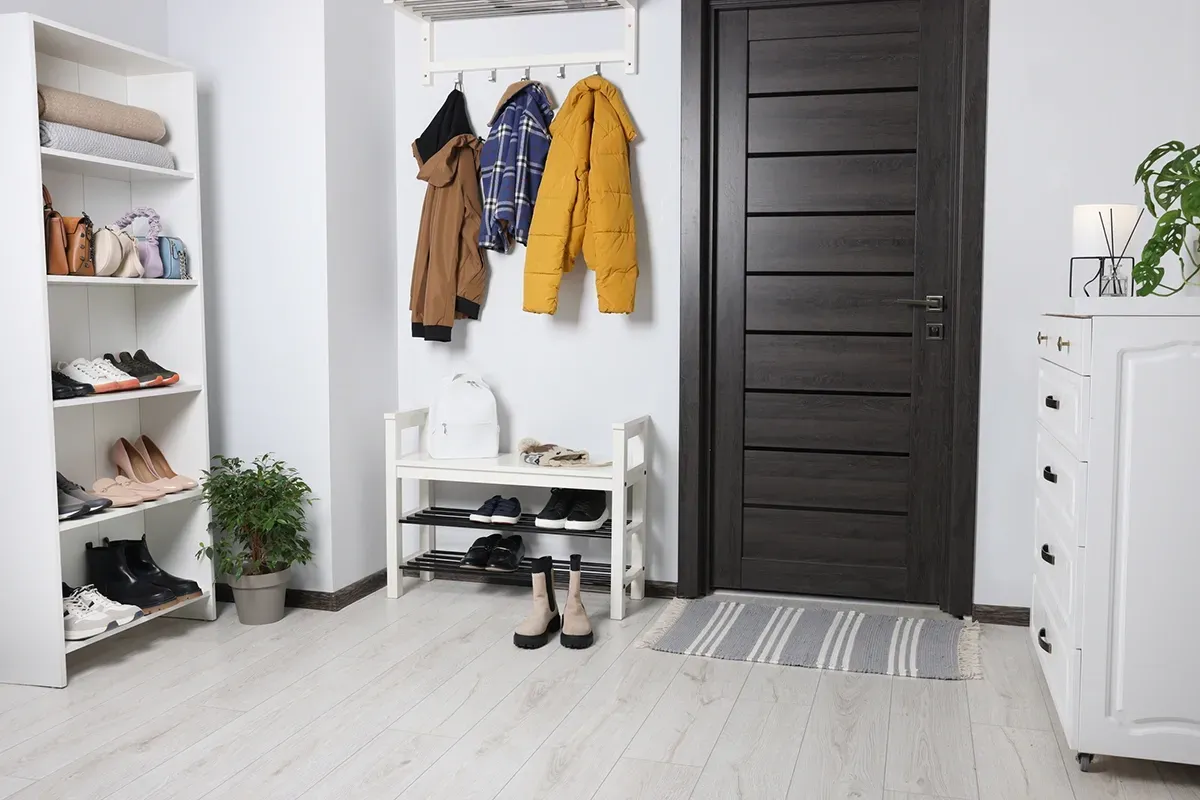
Rainy season also means wet grit. Put a mat outside and inside every entry, and give people a spot to leave wet shoes. You'll cut your sweeping in half.
A Little Prevention Saves a Lot of Cleaning
Felt pads under furniture legs (at least an inch across, bigger for heavy pieces) prevent most scratches before they happen. Rolling office chairs need either soft rubber casters or a chair mat. Area rugs are great in high-traffic zones, but choose ones with breathable, non-rubber backing, since some rubber backings can discolor the finish. And keep pets' nails trimmed. It matters more than any cleaner you'll buy.
Sunlight is worth a mention too. Bamboo, especially darker carbonized styles (bamboo that's been heat-treated for a deeper caramel color), will shift in tone under strong UV. Blinds or UV-filtering window film during peak summer help keep the color even, and moving rugs around now and then avoids a "shadow" outline.
When Cleaning Stops Helping
If your floor looks dull or gray in the walking paths even right after a proper clean, you're probably looking at worn finish, not dirt. More cleaning won't fix that. Depending on the product, a screen and recoat (lightly abrading the top layer and applying a fresh coat) can bring it back, though factory aluminum oxide finishes need careful prep so the new coat actually bonds. Thicker strand-woven bamboo can sometimes be fully sanded and refinished. Many engineered bamboo floors have a thinner top layer, so they have fewer refinishing options, which makes daily care all the more important.
The short version: sweep often, mop barely damp with a cleaner your manufacturer approves, keep the humidity steady, and retire the steam mop to the bathroom tile. Do that and bamboo will look good for a very long time.
If you’re not sure whether your floor needs a better cleaning routine, a recoat, or a replacement board, contact us and our team at Rejuvenation Floor & Design can take a look and walk you through your options.
About the Author:
Levi Winkler is the owner of Rejuvenation Floor & Design, where he has been helping homeowners and businesses transform their spaces with high-quality flooring for over 16 years. Based in Portland, Oregon, Levi specializes in hardwood flooring, as well as luxury vinyl, laminate, and more. With decades of hands-on flooring installation and restoration experience, Levi is known for his attention to detail, product knowledge, and commitment to long-lasting results. He works closely with clients to ensure every flooring project is tailored to their style, needs, and budget.
Recent Articles